
TL;DR:
- Gold trade settlement completes a transaction by transferring gold or cash between buyer and seller after obligations are confirmed. It influences margin calculations, risk management, and the calculation of key trading terms, with settlement prices determined during a specific window on major exchanges. Understanding settlement methods and timing is essential for traders to avoid surprises and effectively manage risks in gold trading.
Gold trade settlement is the process by which a completed gold transaction is finalized through the transfer of funds, physical gold, or both between buyer and seller. Every gold futures contract on exchanges like CME Group or NSE Clearing, and every over-the-counter deal in the spot market, reaches a point where obligations must be discharged. That moment is settlement. Understanding what is gold trade settlement, how prices are calculated, and what delivery methods apply is not optional knowledge for serious traders. It is the foundation of accurate P&L accounting, margin planning, and risk control.
What is gold trade settlement and why does it matter?
Gold trade settlement is defined as the completion of a gold transaction, where the buyer receives gold or its cash equivalent and the seller receives payment, according to the terms specified in the contract. Settlement is not the same as execution. A trade executes the moment buyer and seller agree on price. Settlement happens later, once the clearing corporation confirms obligations and transfers assets or funds.
The distinction matters because the gap between execution and settlement creates exposure. Prices can move between the two events. Margin requirements adjust based on the official settlement price, not the price at which you traded. If you are long gold futures and the settlement price falls below your entry, your account is debited that day, regardless of where the market trades afterward.
Settlement also anchors the gold trading terminology that governs every futures contract. Terms like mark-to-market, final settlement, and variation margin all derive their meaning from the settlement process. Without a clear settlement price, none of those calculations are possible.
How does the gold settlement process work on major exchanges?
The gold settlement process follows a defined sequence on regulated exchanges, and the steps differ slightly between CME Group in the United States and NSE Clearing in India. Both, however, share the same core logic: calculate a fair settlement price, transfer funds electronically, and update margin accounts.

On CME Group, the settlement price is determined within a strict one-minute window from 13:29:00 to 13:30:00 ET for the active contract month. The preferred method is volume-weighted average price, or VWAP, rounded to the nearest tradable tick. This means the settlement price reflects actual trading activity during that window, not a single last-trade snapshot. If VWAP is unavailable due to thin volume, CME applies a tiered fallback: bid/ask midpoint checks, last trade price, or the prior day’s settlement price.
On NSE Clearing, the process uses designated clearing banks to execute fund transfers electronically. Settlement accounts with approved banks are mandatory for all clearing members, and credits and debits are automated per the clearing corporation’s schedule. Final settlement price may be determined by polling, where the exchange surveys market participants to establish a reference price when direct market data is insufficient.
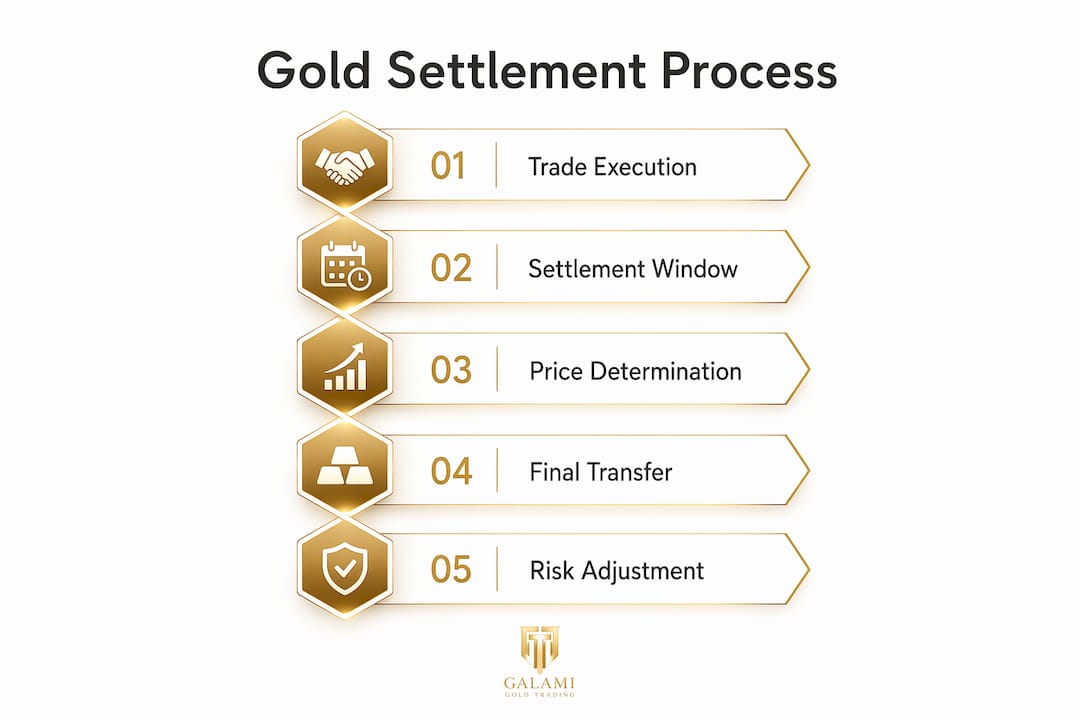
Here is the standard sequence for a gold futures settlement cycle:
- The settlement window opens at the exchange-defined time (13:29 ET on CME for gold).
- VWAP is calculated from all trades executed during the window.
- The settlement price is published and distributed to all clearing members.
- Mark-to-market calculations run against every open position using the new settlement price.
- Variation margin debits and credits are applied to trader accounts overnight.
- On the final trading day, the final settlement price is used to close all remaining open positions.
- Physical delivery or cash finalization occurs based on the contract’s specified settlement method.
Pro Tip: Set a price alert or monitor your platform’s data feed specifically during the CME settlement window (13:29 to 13:30 ET). Moves in that 60-second window directly determine your daily P&L, not the closing price at 5:15 PM ET.
What are the different gold settlement methods?
Gold settlement methods fall into two categories: physical delivery and cash settlement. The contract you trade determines which applies by default, though some exchanges allow election of method before expiry.
Physical delivery requires the seller to transfer actual gold meeting defined quality, quantity, and location standards. On MCX, for example, gold futures are physically settled by default unless the position is squared off before expiry. The gold must meet purity standards, be delivered to an approved vault, and match the contract’s specified weight. Buyers who hold contracts to expiry take ownership of the metal. This method suits refiners, jewelers, and institutional investors who want actual gold rather than a price exposure.
Cash settlement pays out the difference between the contract price and the final settlement price in cash, with no metal changing hands. CME’s 1-Ounce Gold futures use cash settlement, measured in troy ounces, making them accessible to traders who want gold price exposure without the logistics of physical delivery. Cash settlement is the default for most speculative and hedging applications.
| Method | How it works | Best suited for |
|---|---|---|
| Physical delivery | Actual gold transferred to approved vault at contract expiry | Refiners, jewelers, institutional buyers |
| Cash settlement | Price difference paid in cash; no metal transferred | Speculators, hedgers, portfolio managers |
| Polling-based final price | Exchange surveys participants to set final settlement price | Illiquid expiry months, OTC reference pricing |
Key factors that determine which method applies to your position:
- Contract specifications published by the exchange define the default method.
- Traders who want physical delivery must notify the exchange before the first notice day.
- Cash-settled contracts automatically close at the final settlement price with no action required.
- Physical delivery involves additional costs including vault fees, assay charges, and transport.
What nuances and challenges should traders know about settlement timing?
The most common misconception about gold settlement is that the settlement price equals the market’s closing price. It does not. Gold futures settle at 1:30 PM ET, but the market continues trading until 5:15 PM ET. That gap of nearly four hours means your account’s daily P&L is locked in at 1:30 PM, while the market can move significantly before you close your screen.
This creates a specific risk for traders who hold positions overnight. If gold rallies sharply between 2:00 PM and 5:00 PM ET, that gain does not appear in your account until the next settlement cycle. Conversely, a sharp drop after settlement means your margin call arrives the next morning based on the following day’s settlement, not the intraday low you may have already recovered from.
The settlement price calculation hierarchy also matters in volatile markets. When VWAP is unavailable because volume dried up during the settlement window, CME steps through a defined fallback sequence. This prevents manipulation but can produce a settlement price that feels disconnected from where the market was trading just minutes earlier.
“Settlement timing can cause margin and liquidity surprises if traders do not understand that post-settlement market moves impact the next day’s P&L, affecting cash flow and risk exposure.” — NexusFi Academy
NSE Clearing’s polling methodology provides a similar safeguard. Polling methods at exchanges act as fallback mechanisms for final settlement pricing, ensuring price discovery remains functional even when spot market data is missing or illiquid. This is particularly relevant for less active contract months where direct market prices may not exist at expiry.
Pro Tip: Never assume your broker’s end-of-day account statement reflects where gold closed. Check the official settlement price published by CME or your exchange directly. The difference between settlement and close can be $10 to $30 per ounce on active days.
How do gold settlements affect risk management and portfolio decisions?
Settlement is the mechanism through which risk becomes real. Every mark-to-market loss or gain that appears in your account is a direct product of the settlement process. Understanding this connection transforms how you approach risk management in gold trading.
Margin requirements are recalculated after each settlement cycle. If the settlement price moves against your position, your broker draws variation margin from your account automatically. If your account balance falls below the maintenance margin threshold, you receive a margin call before the next trading session opens. Traders who do not hold sufficient liquidity buffers can be forced to close positions at unfavorable prices simply because they misunderstood when settlement occurs.
Settlement timing also shapes hedging strategy. A gold producer hedging future output with short futures positions needs to account for daily variation margin flows. Even if the hedge is perfectly structured, a sustained gold price rally generates daily margin debits that require cash. Producers who do not model this cash flow requirement can face liquidity stress despite holding a theoretically profitable hedge.
For traders using OTC markets or unallocated gold accounts, settlement works differently. OTC gold trades typically settle on a T+2 basis, meaning two business days after the trade date. This contrasts with futures, where mark-to-market settlement happens daily. Knowing which settlement cycle governs your position determines how you plan cash reserves and credit lines.
Key risk management considerations tied to settlement:
- Hold a liquidity buffer equal to at least one day’s maximum expected variation margin.
- Know your exchange’s settlement time and monitor positions before that window closes.
- Align hedging cash flow models with daily settlement cycles, not just final expiry dates.
- For physical delivery contracts, begin delivery logistics planning at least two weeks before first notice day.
Common pitfalls and pro tips for navigating settlement successfully
Most settlement errors are not caused by market moves. They are caused by traders who did not read the contract specifications carefully enough before entering a position.
The most frequent pitfall is confusing the settlement price with the last traded price. These two figures can differ by several dollars per ounce on a volatile day. Using the wrong price to calculate your P&L leads to incorrect margin estimates and position sizing errors.
A second common mistake is failing to act before the first notice day on physically settled contracts. On MCX and similar exchanges, if you hold a long futures position past the first notice day without intending to take delivery, you may be assigned physical gold. The settlement process involves not only fund transfers but also penalties and adjustments for delivery discrepancies, which can be costly for traders who did not plan for physical settlement.
Here is a practical checklist for avoiding settlement surprises:
- Read the contract specification before trading, specifically the settlement method and final settlement date.
- Mark the first notice day and last trading day on your calendar for every open position.
- Confirm whether your broker supports physical delivery or automatically rolls positions before expiry.
- Monitor the settlement window actively on days when you carry large positions.
- Reconcile your account statement against the official settlement price published by the exchange.
Pro Tip: For step-by-step guidance on how gold trading and settlement fit together from entry to exit, the gold trading institutional guide at Galamigold covers the full process in practical detail.
Key takeaways
Gold trade settlement is the mechanism that converts a gold trade into a completed financial obligation, and every margin call, P&L figure, and delivery requirement flows directly from it.
| Point | Details |
|---|---|
| Settlement vs. close price | CME gold settles at 1:30 PM ET via VWAP, not the 5:15 PM market close. |
| Physical vs. cash settlement | Physical delivery requires vault-ready gold; cash settlement pays the price difference only. |
| Margin and liquidity | Daily mark-to-market debits and credits are triggered by settlement prices, not intraday moves. |
| Exchange-specific rules | CME uses a one-minute VWAP window; NSE Clearing uses polling and designated clearing banks. |
| First notice day risk | Holding a physically settled contract past first notice day can trigger unwanted delivery obligations. |
Why settlement mastery separates disciplined traders from reactive ones
I have watched traders with sound market analysis lose money not because they were wrong about gold’s direction, but because they were blindsided by how settlement works. A trader who is long gold, correctly anticipates a rally, but holds through a settlement window where VWAP prints lower than expected will see a margin debit that morning. If they are undercapitalized, they get stopped out before the rally materializes. The trade was right. The settlement preparation was wrong.
At Galamigold, we treat settlement knowledge as a prerequisite, not an advanced topic. Before any position is sized or any delivery is planned, the settlement mechanics of the relevant contract are reviewed. That means knowing the settlement window, the price calculation method, the delivery standards if applicable, and the margin implications of holding through expiry.
The exchanges update their settlement procedures periodically. CME has refined its VWAP calculation methodology, and NSE Clearing has adjusted its polling procedures in response to market feedback. Traders who set and forget their understanding of settlement rules are operating on outdated assumptions. Check exchange circulars and contract specifications at least once per quarter.
Settlement is not administrative detail. It is the moment where the market’s verdict on your position becomes cash in or cash out of your account. Treat it accordingly.
— Galami
How Galamigold supports physical gold trading and settlement

Galamigold operates as a physical gold trading platform built on disciplined execution and transparent supply chains. For investors and traders who want exposure to physical gold without navigating settlement logistics alone, Galamigold’s program covers the full process from sourcing to delivery. The platform is designed for sophisticated investors and corporate entities who need reliable settlement, audited gold, and efficient capital deployment. If you are ready to move beyond futures exposure into direct physical gold investment, explore Galamigold’s physical gold trading program to understand how the process works and what the risks are.
FAQ
What is gold trade settlement in simple terms?
Gold trade settlement is the final step in a gold transaction where the buyer receives gold or cash and the seller receives payment, completing all financial obligations under the contract.
How is the gold futures settlement price calculated on CME?
CME calculates the gold settlement price using VWAP from trades executed between 13:29:00 and 13:30:00 ET, with a defined fallback hierarchy if VWAP is unavailable.
What happens if I hold a physically settled gold futures contract to expiry?
You are obligated to accept or deliver physical gold meeting the exchange’s quality and location standards. Failing to meet delivery requirements triggers penalties managed by the clearing corporation.
What is the difference between daily settlement and final settlement?
Daily settlement uses mark-to-market pricing to credit or debit variation margin each trading day. Final settlement closes all remaining open positions at expiry using the official final settlement price.
Why does the gold settlement price differ from the closing price?
Gold futures settle mid-afternoon via VWAP while trading continues for nearly four more hours, meaning the settlement price and the closing price reflect different points in the trading session.
Recommended
- ISO 4217 XAU Explained: What the Gold Code Means
- Why gold attracts high-net-worth investors: 18% allocation
- Step by Step Gold Transaction Process: 2026 Guide
- Gold Market Dynamics Explained: What Investors Need to Know
Ready to invest in physical gold trade finance?
Both the Zambia–Dubai and Sierra Leone–Dubai programs are open to qualified investors. Minimum investments from $115,000 USD or €125,000 EUR.
Zambia–Dubai Program Sierra Leone–Dubai Program