
TL;DR:
- Gold recast involves melting and reforming existing gold into new designs while maintaining its intrinsic value. Proper execution requires careful testing, controlled melting, and precise documentation to avoid losses and defects. When done professionally, recasting offers investors a cost-effective way to preserve and convert their physical gold into more liquid assets.
Gold recast is defined as the professional process of melting existing gold items, such as inherited jewelry or scrap, and reforming the material into new designs while preserving the gold’s intrinsic value. The industry term for this practice is gold recasting, and it sits at the intersection of metallurgy, craftsmanship, and asset management. For investors and individuals holding physical gold, understanding the gold recasting process is the difference between recovering full value from idle assets and losing it to poor execution. This guide covers the technical steps, the real risks, and the financial case for recasting gold in 2026.
What is gold recast and how does the process work?

Gold recasting is a structured, multi-stage process that takes roughly 5–6 weeks for bespoke work. That timeline reflects the care required at each stage, not inefficiency. Rushing any step produces defects that reduce both the aesthetic and market value of the finished piece.
The process follows this sequence:
- Design consultation. The jeweler or refiner reviews the client’s goals, whether that is a new piece of jewelry, a bar, or a specific form factor for investment purposes. This stage sets the weight target and design parameters.
- Material analysis and purity testing. The gold is tested using X-ray fluorescence (XRF) or fire assay to determine its karat and alloy composition. This step is non-negotiable. Skipping it leads to casting defects later.
- Melting. The gold is heated to its casting temperature. For 14K gold, casting temperature ranges from 1,750°F to 1,900°F, with cooling before quenching. Closed-system melting, using vacuum or induction technology, reduces oxidation and gas absorption, which directly lowers the rate of defects like porosity.
- Casting and cooling. The molten gold fills a mold, often created through the lost-wax casting method. Professional jewelers require roughly double the final piece’s weight in raw gold to account for sprues and ensure the mold fills completely. That extra material is recovered and reused, not wasted.
- Finishing and polishing. The cast piece is cleaned, filed, and polished to its final form. Surface finishing also reveals any subsurface defects that need correction before delivery.
Pro Tip: Ask your jeweler for a written weight record at intake and at delivery. The difference between those two numbers is your documented loss, and any reputable professional will provide it without hesitation.
What happens to gold’s weight during recasting?
Weight loss during recasting is one of the most misunderstood aspects of the gold refashioning process. The short answer: pure gold loses almost nothing, but alloyed gold always loses something.
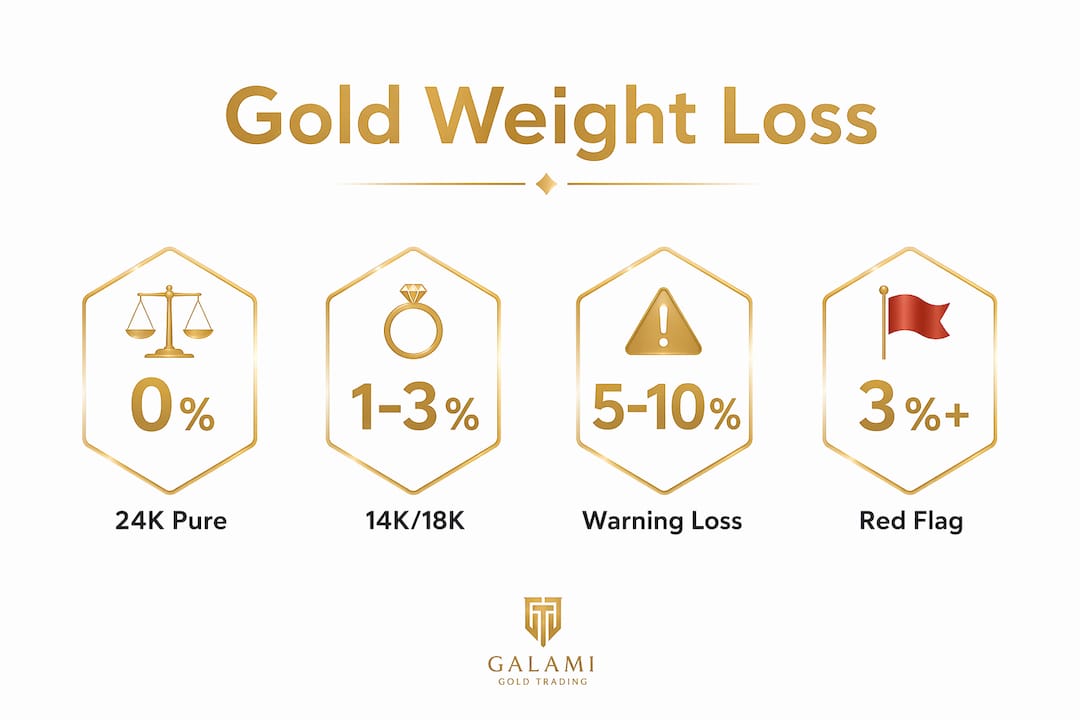
Weight loss is near zero for 24K pure gold, but 1%–3% is standard for 14K and 18K gold due to the oxidation of base metals in the alloy. That loss is not theft. It is chemistry. When zinc, copper, or silver in the alloy are exposed to heat, they oxidize or partially evaporate. The gold itself does not disappear.
| Gold Type | Expected Weight Loss | Red Flag Threshold |
|---|---|---|
| 24K pure gold | Near zero | Any loss above 1% |
| 18K gold | 1%–2% | Above 3% |
| 14K gold | 1%–3% | Above 3% |
| Any karat | 5%–10% | Indicates poor control or unethical reduction |
A 5%–10% loss is a red flag that signals either poor process control or deliberate underreporting of returned gold. Investors holding physical gold should treat this threshold as a hard standard when evaluating any recasting service.
Repeated melting compounds the problem. Base metal elements, particularly zinc, oxidize or evaporate with each heat cycle, gradually degrading the alloy balance and casting properties. Gold that has been recast multiple times without fresh alloy augmentation becomes progressively harder to work with.
Pro Tip: Request a full weight documentation sheet from your refiner. It should list intake weight, melt loss, sprue recovery, and final delivery weight as separate line items.
What challenges come with recasting old gold jewelry?
Old gold jewelry carries hidden complications that make the gold recovery process more demanding than recasting fresh material. Investors and individuals who treat old pieces as straightforward raw material often encounter costly surprises.
The core challenges are:
- Unknown alloy composition. Old jewelry, especially pieces acquired through inheritance or secondary markets, frequently contains unknown alloy compositions and contaminants such as polishing compounds and industrial solders. Without XRF testing, the jeweler is working blind.
- Solder contamination. Solders from previous repairs have lower melting points and lower purity than the surrounding gold. When they enter the melt, they contaminate the batch and cause brittleness or surface defects in the finished piece.
- Mixed karats. Mixing different karats, such as 10K and 14K, produces unpredictable results. Color inconsistencies and durability problems arise without strict alloy control. This is not a minor cosmetic issue. It affects the structural integrity of the piece.
- Metal degradation from repeated melting. Gold that has been recast before carries a degraded alloy profile. Each cycle strips out volatile base metals, leaving an alloy that behaves differently under heat than its karat stamp suggests.
- Design limitations. Design limitations exist when using customer-supplied gold. Complex or highly detailed designs require consistent, clean metal. Contaminated or mixed-karat gold cannot reliably fill fine mold details.
When contamination or mixed-karat issues are severe, industrial refining is the better path. Refining strips the gold back to a pure state before recasting begins, eliminating the variables that cause defects. For investors focused on maintaining gold investment risks at a manageable level, refining first and recasting second is the more disciplined approach.
The best professional practice is to mix clean, sorted scrap with fresh master alloy rather than relying solely on unknown old gold scrap. Fresh alloy augmentation restores predictable casting behavior and consistent color.
What are the benefits of gold recasting for investors?
Gold recasting preserves the intrinsic value of physical gold while giving investors and owners control over its form. That combination is rare in asset management, and it is the core financial case for recasting rather than selling.
The key benefits are:
- Value preservation. Recasting retains the gold content of the original piece. Selling scrap gold to a dealer typically returns 70%–80% of spot value. Recasting converts the same material into a new asset at or near its full gold value, minus documented processing costs.
- Customization without loss. An inherited ring can become a bar, a coin, or a new piece of jewelry without surrendering the gold content. The form changes. The value does not.
- Cost efficiency. Buying new gold jewelry or investment pieces carries retail premiums. Recasting existing gold avoids those premiums entirely. The investor pays for labor and processing, not for new metal.
- Portfolio flexibility. Physical gold held in awkward forms, such as broken jewelry or mismatched pieces, is illiquid. Recasting converts those assets into standardized or purpose-built forms that are easier to trade, store, or use as collateral. This connects directly to portfolio diversification strategies that treat physical gold as a liquid, flexible asset class.
- Transparency and documentation. Professional recasting generates a paper trail: intake weight, alloy test results, melt loss records, and final delivery weight. That documentation supports accurate portfolio valuation and reduces the risk in gold investment that comes from holding unverified assets.
The financial case for recasting is strongest when the gold is clean, single-karat, and free from heavy contamination. When those conditions are met, recasting is one of the most cost-effective gold recovery techniques available to individual investors.
For investors navigating the Dubai and international gold markets, legal guidance on avoiding risky gold purchases is a useful complement to understanding recasting, particularly when dealing with inherited or secondhand pieces of uncertain provenance.
Key Takeaways
Gold recasting preserves intrinsic gold value by converting existing material into new forms through a documented, multi-stage professional process that controls weight loss and alloy quality.
| Point | Details |
|---|---|
| Weight loss standards | Expect 1%–3% loss for 14K/18K gold; anything above 3% requires a written explanation from your refiner. |
| Contamination is the main risk | Solders, mixed karats, and unknown alloys cause defects; always test material before melting. |
| Closed-system melting is preferred | Vacuum or induction melting reduces oxidation and porosity, producing more consistent results. |
| Refining before recasting | Heavily contaminated or mixed-karat gold should be refined to pure first, then recast for best quality. |
| Documentation protects investors | A full weight record at intake and delivery is the standard for any reputable recasting service. |
My honest view on gold recasting as an investment tool
Most investors underestimate how technical gold recasting actually is. They assume that because gold is gold, melting and reforming it is straightforward. It is not. The metallurgy of alloyed gold is genuinely complex, and the difference between a competent refiner and an inexperienced one shows up immediately in the finished piece.
The misconception I encounter most often is that any gold can be melted and directly reused without adjustment. That belief leads investors to hand over mixed-karat pieces to jewelers who lack the equipment or expertise to handle them properly. The result is a recast piece with color inconsistencies, hidden porosity, or a karat stamp that does not reflect the actual alloy. None of those outcomes are acceptable for an investor who cares about asset integrity.
My practical advice: treat the selection of a refiner or jeweler the same way you would treat the selection of a financial counterparty. Ask for their testing protocol, their weight documentation process, and their policy on contaminated material. A professional will answer all three questions without hesitation. Someone who deflects or dismisses those questions is not the right partner for your gold.
Recasting is genuinely valuable when done correctly. It converts idle or awkward physical gold into a clean, documented, tradeable asset. That is a real financial benefit. But the value only materializes when the technical execution meets a professional standard.
— Galami
Galamigold and physical gold investment in 2026
Galamigold operates at the intersection of physical gold supply and disciplined investment execution. For investors who hold gold in various forms, including pieces that may benefit from recasting or refining, having a trusted counterparty for sourcing, trading, and managing physical gold is the foundation of a sound strategy.

Galamigold’s physical gold trading programs are built on transparency, documented supply chains, and audited processes. Whether you are sourcing new gold to complement recast material or looking to deploy capital into physical gold assets, Galamigold provides the structure and accountability that serious investors require. Review the risk disclosure to understand how Galamigold approaches capital protection across its investment programs.
FAQ
What is gold recast in simple terms?
Gold recast is the process of melting existing gold items and reforming them into new pieces or investment forms. The gold’s intrinsic value is preserved throughout the process.
How much weight is lost when recasting gold?
Weight loss is near zero for 24K gold and typically 1%–3% for 14K and 18K gold due to oxidation of base metals. Any loss above 3% requires a documented explanation from the refiner.
Can you recast gold jewelry at home?
Professional recasting requires controlled melting temperatures, closed-system equipment, and alloy testing that home setups cannot replicate. Attempting it without proper equipment risks significant gold loss and safety hazards.
When should you refine gold instead of recasting it?
Refining is the better choice when gold contains heavy solder contamination, mixed karats, or unknown alloy compositions. Refining strips the material back to pure gold before recasting begins, eliminating variables that cause defects.
Is gold recasting profitable for individual investors?
Recasting is cost-effective when the gold is clean and single-karat, because it avoids the retail premiums of buying new gold and recovers near-full value from existing material. Contaminated or mixed-karat gold reduces that advantage and may require additional refining costs.
Recommended
- ISO 4217 XAU Explained: What the Gold Code Means
- Operational Risk in Gold Trading: What You Must Know
- Why trust matters in gold trading: Safeguarding institutional investments
- Gold trading risk management: strategies for institutions
Ready to invest in physical gold trade finance?
Both the Zambia–Dubai and Sierra Leone–Dubai programs are open to qualified investors. Minimum investments from $115,000 USD or €125,000 EUR.
Zambia–Dubai Program Sierra Leone–Dubai Program