
TL;DR:
- Gold provenance is the documented origin story that encompasses mining, refining, recycling, and transformation, supported by auditable records. It is broader than traceability, including context, evidence, and legal compliance, which greatly influence resale value and ethical standing. Verification involves physical markers, certifications, and increasingly, digital systems like LBMA’s Gold Bar Integrity, crucial for ensuring trust and transparency in the gold supply chain.
Most investors assume gold’s value comes entirely from its weight and purity. That’s only half the story. What is gold provenance, exactly? It’s the documented origin story of a specific piece of gold, covering how it was mined, refined, recycled, or transformed, and supported by certificates and chain-of-custody records. For serious investors and collectors, this documentation isn’t a formality. It directly affects resale confidence, ethical standing, legal compliance, and in many cases, the price you can command or negotiate. Modern traceability technology and international regulatory frameworks have made provenance verification both more rigorous and more accessible than ever before.
Table of Contents
- Key takeaways
- What gold provenance actually means
- Why provenance carries legal and ethical weight
- How gold provenance is verified in practice
- How provenance shapes investment decisions
- Best practices for assessing gold provenance
- My take on where provenance is headed
- How Galamigold approaches gold provenance
- FAQ
Key takeaways
| Point | Details |
|---|---|
| Provenance is a documented origin story | Gold provenance covers mining, refining, recycling, and transformation, all supported by auditable records. |
| Traceability and provenance are not the same | Traceability tracks custody steps; provenance requires context, evidence, and a verifiable narrative. |
| Ethics and legality depend on provenance | International frameworks like the LBMA and OECD use provenance to combat illicit gold and protect human rights. |
| Technology strengthens verification | Digital tools like LBMA’s Gold Bar Integrity provide near real-time confirmation of gold origin globally. |
| Provenance affects investor outcomes | Documented provenance reduces resale discounts, improves liquidity, and supports ESG-aligned investment decisions. |
What gold provenance actually means
Gold provenance is the documented story of a specific quantity of gold, covering every stage from extraction through processing to its current form. This includes whether the gold was mined from a specific deposit, which refinery processed it, whether it contains recycled material, and what certifications accompanied each step. Think of it as a biography for your asset, backed by paper and digital records rather than memory.
Many people confuse provenance with traceability, or use the terms interchangeably. They are related but distinct. Traceability refers to the step-by-step custody tracking of gold as it moves through the supply chain. Provenance is broader. It includes the story, the evidence, and the context that give those custody steps meaning. Partial traceability may exist without strong provenance; verified provenance requires batch references, certificates, and auditable records that can withstand external scrutiny.
Responsible sourcing sits within the provenance framework as well. When gold is sourced responsibly, it means the mining or recycling processes met specific environmental, labor, and governance standards. That responsible sourcing claim only holds up if it is documented and verifiable. Marketing language without records is not provenance. It is an assertion.
The key documents and markers that support provenance claims include:
- Assay certificates: Confirm gold purity and typically identify the refinery and lot.
- Chain-of-custody documents: Record each transfer of ownership or custody from origin to current holder.
- Hallmarks and maker’s marks: Physical stamps indicating origin, purity, and the entity responsible for assaying.
- Refinery certifications: Show that a refinery meets recognized standards like LBMA Good Delivery.
- Invoices and transaction records: Establish commercial continuity and legal transfers.
Pro Tip: When reviewing provenance documentation, check that the batch or lot reference on your assay certificate matches the serial number or markings on the physical gold. Mismatches are a common red flag in fraudulent provenance claims.
Why provenance carries legal and ethical weight
Gold without verified origin can be conflict gold, illegally mined gold, or gold tied to human rights abuses. The risks are not theoretical. Illicit gold entering global markets represents one of the more persistent compliance challenges in the precious metals industry, and regulators have responded with increasingly detailed due diligence requirements.
The LBMA Responsible Gold Guidance sets out what refiners must do to maintain their status on the LBMA Good Delivery List. This includes independent annual audits conducted against the OECD Due Diligence Guidance for Responsible Supply Chains of Minerals from Conflict-Affected and High-Risk Areas. Refiners must identify, assess, and mitigate risks across their entire supply chain. If you hold LBMA Good Delivery bars, you are already benefiting from this framework, even if you have never seen the underlying audit reports.
Voluntary standards add another layer. The Responsible Jewellery Council’s Chain of Custody standard certifies gold as fully traceable and responsibly sourced from mine to retail. Certification is voluntary, but it provides differentiated trust in markets where buyers are increasingly asking hard questions about origin.
“Provenance is not just transparency. It is the mechanism that prevents illicit gold from entering legitimate markets and protects the integrity of the entire supply chain.” — World Gold Council, 2026
For investors thinking about ESG alignment or institutional-grade compliance, understanding gold origins through a responsible gold supply chain is no longer optional. It is a core part of risk management.
How gold provenance is verified in practice
Verification works on two levels: physical identification and documentation. Physical markers like hallmarks and maker’s marks tell you who assayed the gold and to what standard. Hallmarks can be forged, however, so they work best when paired with independent documentation and, where warranted, laboratory testing.
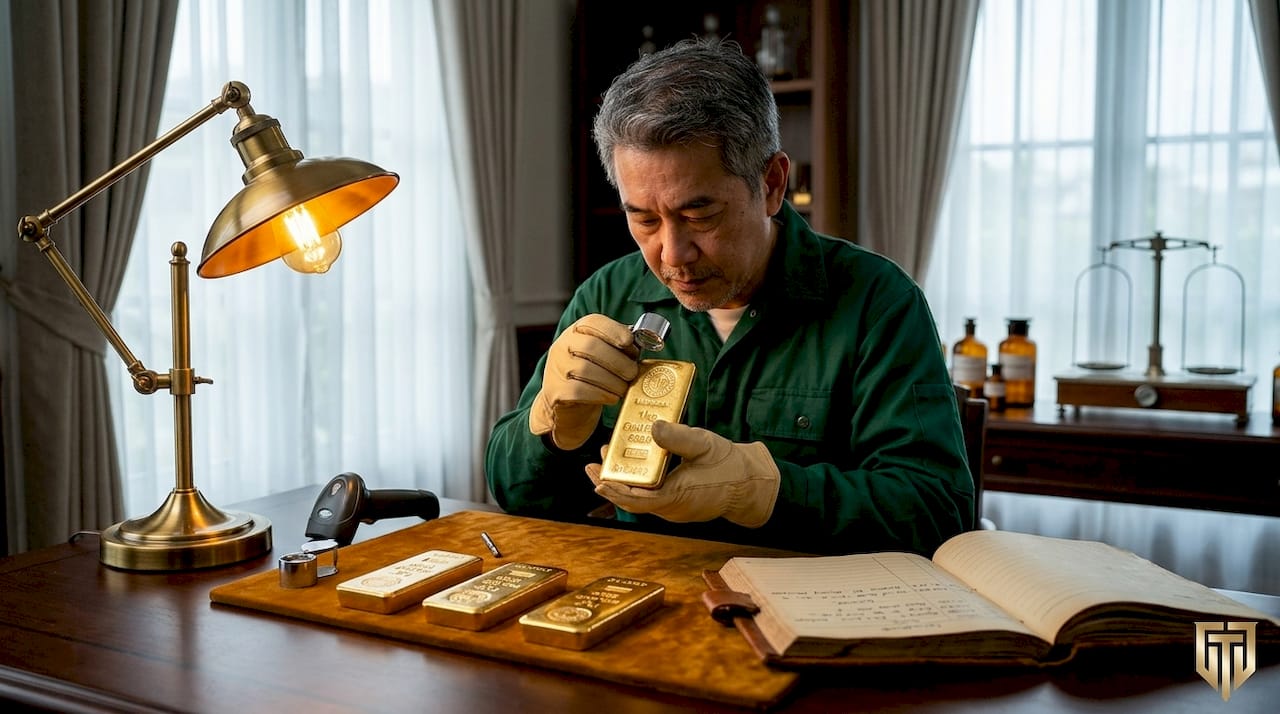
The more significant development in recent years is digital traceability. The LBMA’s Gold Bar Integrity ecosystem digitally traces gold globally using a secure database, accredited security features, and near real-time reporting. This means that for bars within the GBI system, investors can confirm origin and movement without relying solely on physical inspection or paper records.
Here is how the main verification methods compare:
| Method | What it confirms | Limitations |
|---|---|---|
| Hallmarks and maker’s marks | Purity, refiner identity, assay date | Can be forged; verify against documentation |
| Assay certificate | Purity, lot/batch reference, refinery | Only as strong as the issuing institution’s credibility |
| Chain-of-custody documents | Custody transfers and commercial history | Gaps in records undermine the full provenance story |
| LBMA Good Delivery marking | Refiner meets LBMA standards | Applies to bars, not granules or fabricated products |
| Digital traceability (GBI) | Near real-time movement and origin data | Coverage limited to enrolled bars and institutions |
One challenge that often surprises investors: melting erases physical origin. Once gold is smelted into a new bar or product, its physical history disappears. Credible provenance after melting depends entirely on the refinery’s governance model, segregation practices, and audited documentation. This is why the quality of the refinery you work with matters as much as the paperwork they produce.
Pro Tip: For institutional-grade confidence, seek bars with LBMA Good Delivery markings and confirm they are registered within a digital traceability ecosystem. Without recognized frameworks, provenance claims become very difficult to verify after purchase.
How provenance shapes investment decisions
Provenance does something that purity alone cannot: it builds transferable confidence. When you go to sell or transfer gold, the buyer’s willingness to pay full market value is tied directly to how much they trust what you are telling them about that gold’s history. Provenance increases trust and can reduce discounts in resale situations, and this effect is most pronounced in institutional or high-value transactions where counterparties conduct genuine due diligence.
For collectors, provenance carries additional weight. A historic gold coin or bar with documented custody history, especially one linked to a significant institution or event, can command prices well above melt value. The story, when verifiable, is part of the asset.
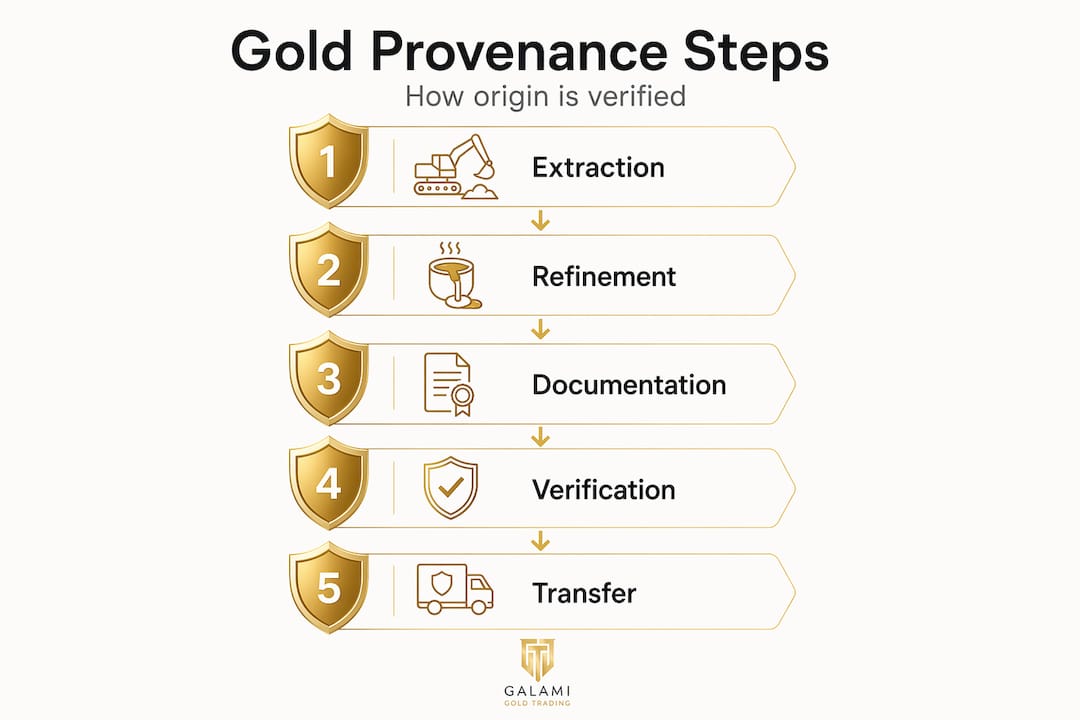
From an ESG perspective, gold traceability in the supply chain directly supports responsible investing objectives. Institutional allocators increasingly require that physical gold holdings meet sourcing standards aligned with human rights and environmental governance. Gold that cannot demonstrate its origins will face growing barriers to acceptance in compliant portfolios.
Practical considerations for investors include:
- Liquidity: Well-documented gold, particularly LBMA Good Delivery bars, trades more freely in institutional markets because counterparties face less verification burden.
- Negotiation leverage: Sellers with complete provenance documentation are in a stronger position when negotiating price or terms.
- Compliance protection: In jurisdictions with strong anti-money laundering requirements, documented provenance protects buyers from unwitting involvement in illicit transactions.
- Reputational protection: For family offices and institutional investors, holding undocumented gold carries reputational risk that cannot be offset by yield.
Best practices for assessing gold provenance
Applying provenance knowledge in practice requires a systematic approach. These steps will protect you from both deliberate fraud and honest gaps in documentation:
- Request full documentation before purchase. This includes the assay certificate, chain-of-custody records, and the refinery’s current certification status. If a seller cannot provide these, treat that as a material risk, not a minor inconvenience.
- Verify refinery credentials independently. Check that the refinery appears on the LBMA Good Delivery List or holds current RJC certification. These are publicly accessible databases.
- Understand the source type. Mined, recycled, and blended gold have different documentation trails. Recycled gold can be fully provenance-compliant, but the documentation requirements are different and should be reviewed accordingly.
- Cross-check physical markings against records. Lot or batch numbers on physical gold must match the certificates provided.
- Ask about digital traceability enrollment. For bars, confirm whether they are registered in a system like LBMA’s Gold Bar Integrity. This adds a verification layer that paper alone cannot replicate.
Pro Tip: When working with a new refiner or dealer, ask specifically about their segregation practices. A refiner that mixes gold from multiple sources without proper governance cannot guarantee the provenance of any individual lot, regardless of the certificates they issue.
The RJC Chain of Custody certification is worth understanding even for investors who primarily buy bars rather than jewelry. It demonstrates that end-to-end controls exist across the supply chain, not just at the refining stage. For investors thinking about evaluating gold traders in 2026, this kind of certification from a counterparty signals genuine commitment to provenance integrity.
My take on where provenance is headed
I’ve watched the conversation around gold provenance shift from a compliance checkbox to a genuine competitive differentiator, and the pace of that shift has accelerated significantly in the last three years. What I find most telling is how many investors still equate “I know my gold is pure” with “I know my gold is provenance-clean.” Those are entirely different claims, and conflating them creates real exposure.
What I’ve learned working in physical gold markets is that documentation gaps are rarely the result of outright fraud. More often, they reflect supply chain participants who simply never built the governance infrastructure to generate reliable records. That’s a different problem, but it produces the same outcome: gold you cannot fully account for.
My honest recommendation is to treat provenance due diligence the same way you treat legal title review in real estate. You wouldn’t skip it because the property looks right. The same discipline applies here. Technology is making this easier. Digital traceability systems are closing the gaps that paper-based processes left open for decades. Regulatory pressure from bodies like the LBMA and OECD is pushing the industry toward a standard where comprehensive provenance documentation becomes the norm rather than the exception. That’s a development worth positioning for now, not after it becomes mandatory.
— Galami
How Galamigold approaches gold provenance

At Galamigold, provenance is not a secondary consideration. It sits at the center of how we structure every transaction. Our physical gold trading program operates through well-established supply chains built on documented custody, certified refinery relationships, and compliance with recognized international standards. We work with counterparties whose credentials we verify and whose documentation we review before capital moves.
For investors who want to deploy capital into physical gold with confidence in what they are actually buying, that level of rigor matters. Galamigold’s approach is designed to give sophisticated investors the audit-ready documentation and transparency they need, not marketing assurances. If you are ready to engage with physical gold on those terms, we are built for that conversation.
FAQ
What is gold provenance in simple terms?
Gold provenance is the documented history of a piece of gold, covering its origin, processing, and all custody transfers, supported by certificates and auditable records.
How is gold provenance different from gold traceability?
Traceability tracks the custody steps gold takes through the supply chain. Provenance is broader and includes the context, evidence, and verified story that makes those steps meaningful and auditable.
Why does gold provenance matter to investors?
Documented provenance reduces resale discounts, supports compliance with anti-money laundering regulations, and allows gold to meet the ethical sourcing requirements of ESG-aligned institutional portfolios.
Can melting destroy gold provenance?
Yes. Melting erases physical origin markers. After melting, provenance depends entirely on the refinery’s segregation practices, governance model, and audited chain-of-custody documentation.
What certifications confirm responsible gold provenance?
The LBMA Good Delivery status and the Responsible Jewellery Council’s Chain of Custody certification are the most recognized. Both require independent audits and verified sourcing practices.
Recommended
- What Is Non-Bank Gold Trading? A 2026 Investor Guide
- Institutional Gold Broker Checklist: 2026 Vetting Guide
- Why trust matters in gold trading: Safeguarding institutional investments
- How to Ensure Transparency in Institutional Gold Trading
Ready to invest in physical gold trade finance?
Both the Zambia–Dubai and Sierra Leone–Dubai programs are open to qualified investors. Minimum investments from $115,000 USD or €125,000 EUR.
Zambia–Dubai Program Sierra Leone–Dubai Program