
TL;DR:
- Logistics in gold trading involves secure transport, chain-of-custody management, and coordination from mine to market. Disruptions in transportation or hub operations can cause price volatility, premiums increases, and supply delays. Monitoring global logistics hubs, regulatory changes, and supply chain signals provides a strategic advantage in managing risks.
The role of logistics in gold trading is the physical coordination, secure transport, and chain-of-custody management that moves gold from mine to market while preserving price integrity and liquidity. Without it, even the most favorable macroeconomic conditions cannot guarantee gold reaches buyers on time or at the expected price. Logistics in precious metals is not a back-office function. It is a primary market variable. Armored transport firms, air freight carriers, refining centers, and regulatory bodies like India’s SEBI all shape how efficiently gold flows through the global supply chain. Analysts who ignore logistics are reading only half the market.
What is the role of logistics in gold trading?
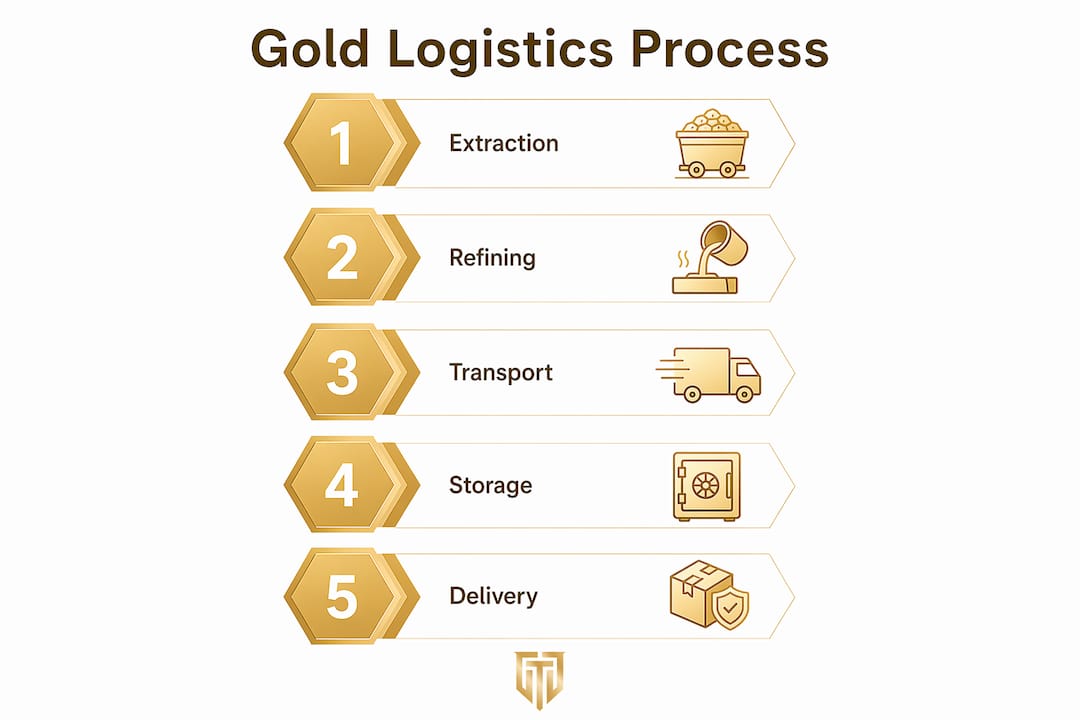
Logistics in gold trading covers every physical and operational step between extraction and final delivery. That includes doré bar collection at mining sites, transport to refineries, conversion to tradable bars, and final delivery to vaults, dealers, or end buyers. Each stage carries distinct risk, cost, and timing implications that feed directly into spot prices and dealer premiums.
The supply chain for gold trading is more fragile than most analysts assume. Gold is dense, high-value, and a target for theft, which means every transport leg requires armored vehicles, armed escorts, specialized insurance, and documented chain-of-custody records. A single gap in that chain can void insurance coverage, trigger regulatory penalties, or delay settlement. Understanding physical gold trading mechanics is the foundation for reading logistics risk correctly.
The three dominant transport modes in gold logistics are air freight, armored road transport, and secure sea freight for bulk transfers. Air freight handles the majority of high-value, time-sensitive shipments. Armored trucks cover last-mile delivery within regions. Sea freight is reserved for large-volume, lower-urgency transfers where cost efficiency outweighs speed. Each mode carries a different risk profile, and traders who understand those profiles can anticipate delivery timing and price behavior more accurately.
From mine to refinery: the first critical leg
Doré bars, the semi-pure gold alloy produced at mine sites, must reach certified refineries before gold enters the tradable market. This leg is often the most logistically vulnerable. Mining operations in West Africa, South America, and Central Asia frequently operate in areas with limited transport infrastructure, which means delays at this stage ripple forward through the entire supply chain. Refineries in Switzerland, South Africa, and the UAE process the bulk of global doré output, and their throughput capacity directly constrains how quickly new supply reaches the market.
Pro Tip: Monitor refinery throughput reports from major Swiss and UAE facilities. Slowdowns there signal supply tightening weeks before spot prices reflect it.
Which global hubs dominate gold logistics?
Dubai is the world’s dominant gold logistics hub. It functions as the “Singapore of precious metals,” a hyper-efficient transfer point between Eastern supply and Western demand that relies heavily on air freight. The Dubai Multi Commodities Centre (DMCC) hosts major refineries, vaulting facilities, and trading desks that collectively process a substantial share of global gold flows. That concentration creates extraordinary efficiency under normal conditions and extraordinary fragility when disruptions occur.
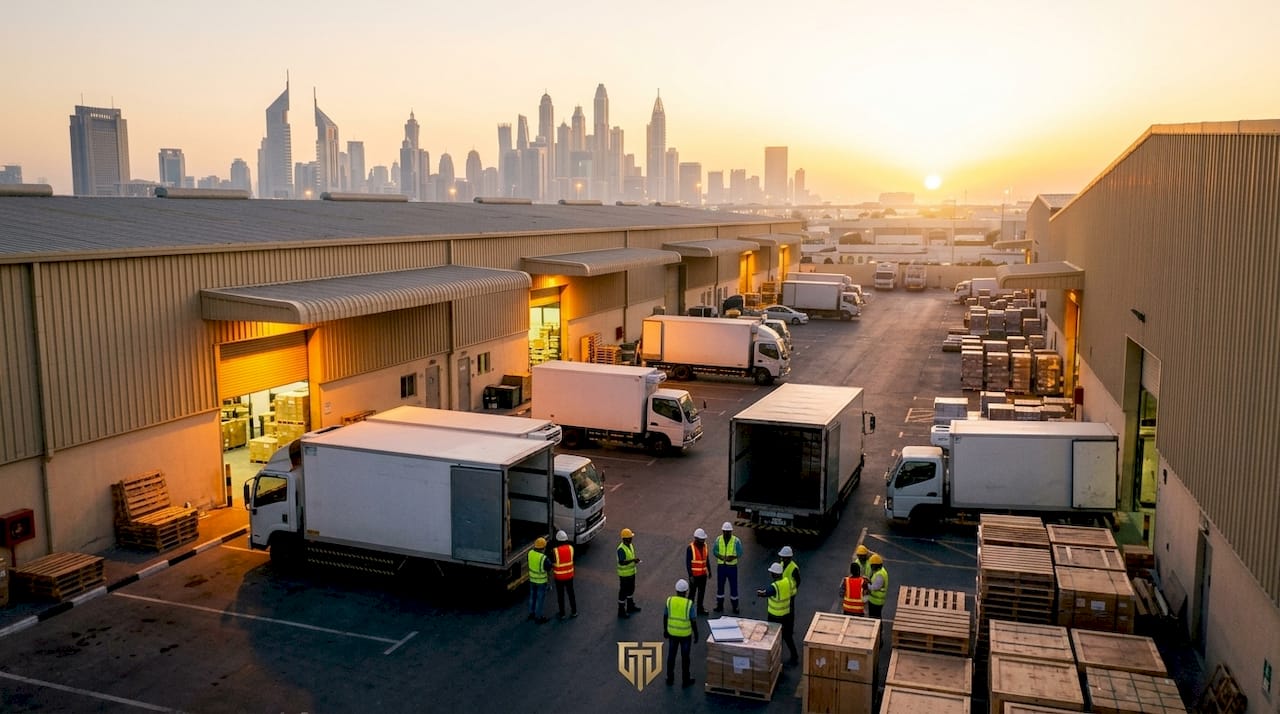
Other significant hubs include Singapore, London, and Mumbai. Singapore serves Southeast Asian and Chinese demand corridors. London’s LBMA-cleared market sets the global benchmark price. Mumbai handles Indian domestic demand, which is among the largest in the world. Each hub has its own regulatory environment, insurance requirements, and transport infrastructure, creating both arbitrage opportunities and execution complexity for cross-border traders.
The scale of air freight in this system is striking. A Boeing 777 freighter can carry over 100 tonnes of gold worth approximately $6.5 billion in a single flight. That figure illustrates why airspace access is not a logistical detail but a market-moving variable. When Dubai’s airspace faces restrictions, gold piles up at origin airports and forces rerouting through slower sea freight, which raises insurance costs and extends delivery timelines.
Key functions that major hubs provide to the gold supply chain:
- Vaulting and custody: Certified vaults in Dubai, Singapore, and London hold allocated and unallocated gold for institutional clients, providing liquidity without requiring physical movement.
- Refining and assay: Hub-based refineries certify gold purity, a prerequisite for LBMA good delivery status and exchange-traded settlement.
- Escrow and settlement: Escrow services separate fund transfer from logistics control, acting as a neutral circuit breaker triggered by verified milestones such as proof of transit or customs inspection.
- Insurance and bonding: Hub-based insurers specialize in high-value cargo, offering coverage terms that smaller regional markets cannot match.
“Dubai’s logistics efficiency is crucial to global gold liquidity. Its disruption impacts arbitrage, pricing, and market confidence extensively.” — overcentral.com
The concentration of gold flows through a small number of hubs creates what analysts call a hidden risk. When a primary logistics node slows down, there is often no ready alternative with equivalent capacity, certification, and insurance infrastructure. Diversifying refining locations and building alternative corridors is the structural answer, but it requires capital investment that the market has been slow to make.
How do logistics disruptions affect gold prices?
Logistics disruptions translate directly into price volatility. Trucking shutdowns in 2026 caused delivery delays of 3–5 days and triggered spikes in dealer premiums due to armored transport scarcity. Those delays did not just inconvenience buyers. They reduced physical supply available for immediate delivery, which pushed premiums above spot price and created localized price dislocations.
The price sensitivity is measurable. A trucking company shutdown impacting gold logistics produced a 0.9% spot price spike over one week. That is a significant move for a commodity that trades in tight ranges during stable periods. The mechanism is straightforward: supply shortfalls reduce dealer inventory, dealers raise premiums to ration available stock, and the premium increase feeds into reported spot prices through arbitrage pressure.
| Disruption type | Typical delay | Market impact |
|---|---|---|
| Armored truck shutdown | 3–5 days | Dealer premium spike, localized shortage |
| Airspace restriction (Dubai) | 1–2 weeks | Rerouting to sea freight, higher insurance costs |
| Refinery throughput slowdown | 2–4 weeks | Reduced good-delivery bar supply, LBMA settlement pressure |
| Geopolitical corridor closure | Weeks to months | Arbitrage dislocations, hub concentration risk |
Geopolitical tensions amplify these effects. When conflicts restrict airspace over key transit corridors, gold cannot move through Dubai at normal volumes. The metal accumulates at origin points, forcing operators to use slower sea routes with higher insurance premiums and longer settlement timelines. Traders who are not monitoring these logistics variables are exposed to price moves they cannot explain through financial data alone.
Pro Tip: Trucking company workforce reductions are leading indicators of regional bullion shortages. Watch logistics provider hiring and operational announcements before public supply data confirms the shortage.
The loss of logistics redundancy through hub centralization is the systemic risk that most gold market analyses underweight. When the primary logistics node fails, the market does not smoothly reroute. It stalls. Prices spike. Liquidity drops. Traders who have built logistics awareness into their risk management frameworks are positioned to act while others are still diagnosing the problem.
What regulatory and technology trends are reshaping gold logistics?
Regulation is tightening the requirements for secure logistics in gold trade, and that tightening is raising the bar for who can participate in certified supply chains. India’s SEBI introduced Vault Manager Regulations in 2024 that mandate GPS tracking and insured carriers for all certified bullion transit. The Indian bullion logistics sector is projected to grow at an 11.5% CAGR through 2036 as a direct result of these mandates. That growth reflects the cost of compliance, but also the market premium that certified, traceable logistics commands.
The key technology and regulatory trends currently reshaping gold logistics include:
- GPS tracking mandates: SEBI’s 2024 regulations require real-time location data for bullion in transit, reducing theft risk and improving chain-of-custody documentation.
- Insured carrier certification: Only carriers meeting minimum insurance thresholds qualify for certified bullion transport, which concentrates volume among a smaller set of compliant operators.
- Digital escrow integration: Escrow platforms now trigger fund releases based on verified logistics milestones, reducing counterparty risk in cross-border transactions without requiring physical presence.
- Predictive analytics: Supply chain data platforms analyze refinery throughput, carrier capacity, and customs clearance times to forecast delivery windows and flag emerging bottlenecks.
- AML compliance in transport: Gold trading regulations in 2026 increasingly require logistics providers to document beneficial ownership of gold in transit, adding a compliance layer to physical transport.
These trends raise operating costs for logistics providers in the short term. The long-term effect is a more transparent, auditable supply chain that reduces the information asymmetry between large institutional traders and smaller market participants. Analysts who track gold market insights will find that logistics compliance data is becoming a reliable proxy for supply chain health.
Key Takeaways
Secure, well-managed logistics in gold trading directly determines price stability, physical availability, and market liquidity across every major trading hub.
| Point | Details |
|---|---|
| Logistics drives price | Trucking shutdowns and airspace restrictions cause measurable spot price spikes and dealer premium increases. |
| Dubai is the critical node | The DMCC hub handles a dominant share of global gold flows; its disruption cascades across all major markets. |
| Hub concentration is a hidden risk | Over-reliance on single logistics nodes creates systemic fragility with no immediate alternative capacity. |
| Regulation raises the bar | SEBI’s 2024 GPS and insurance mandates are setting a new compliance standard for certified bullion transport globally. |
| Escrow links logistics to settlement | Digital escrow triggered by verified transit milestones reduces counterparty risk in cross-border gold transactions. |
Logistics intelligence is the edge most gold analysts are not using
Most gold market analysis focuses on interest rates, central bank demand, and ETF flows. Those are real drivers. But the physical supply chain is where price dislocations actually form, and most analysts are not watching it.
I have seen traders caught off guard by premium spikes that had nothing to do with macroeconomic signals. The cause was a regional armored carrier reducing its fleet. That kind of operational change does not show up in financial data for weeks. By the time the shortage appears in public supply reports, the price move has already happened.
The Dubai concentration problem is the one I find most underappreciated. The market has built extraordinary efficiency around a single hub, and that efficiency feels permanent until it is not. A conflict, a regulatory change, or even a major weather event affecting Dubai International Airport can freeze global gold flows within 48 hours. The traders who have mapped alternative corridors and pre-arranged sea freight options are the ones who continue to execute while others wait.
Regulatory trends are actually working in the market’s favor here. GPS tracking mandates and insured carrier requirements create a data trail that sophisticated analysts can use as a real-time supply chain monitor. When certified carrier capacity drops in a region, that is a signal. When escrow platforms report delays in logistics milestone verification, that is a signal. The information is available. Most traders are not looking for it.
My recommendation is direct: build logistics intelligence into your gold market monitoring the same way you track COMEX positioning or LBMA clearing volumes. The supply chain is not separate from the market. It is the market’s physical foundation.
— Galami
Galamigold’s position in secure gold logistics
Galamigold operates within Dubai’s established bullion supply chain, where secure logistics and vaulting infrastructure are central to every transaction. The platform’s focus on disciplined execution and transparency reflects the operational reality that physical gold trading demands: verified chain-of-custody, compliant transport, and settlement processes that do not leave counterparty risk unmanaged.

For investors and analysts who want exposure to physical gold through a platform that treats logistics as a core competency rather than an afterthought, Galamigold’s physical gold trading services are built on the same supply chain principles this article examines. Its Dubai base positions it at the center of the world’s most active gold logistics corridor. Explore Galamigold’s investment programs to understand how logistics-aware trading operations manage risk at the supply chain level.
FAQ
What is the role of logistics in gold delivery?
Logistics in gold delivery covers the secure transport, insurance, chain-of-custody documentation, and customs clearance required to move physical gold from seller to buyer. Failures at any stage delay settlement and increase costs for both parties.
Why does Dubai dominate gold logistics?
Dubai’s DMCC provides refining, vaulting, and air freight infrastructure that connects major gold-producing regions to global demand centers. Its geographic position between East and West makes it the most efficient transfer point in the global gold supply chain.
How do trucking disruptions affect gold prices?
Armored truck shutdowns reduce the physical supply available for immediate delivery, which forces dealers to raise premiums above spot price. A single trucking company closure has produced a 0.9% spot price increase within one week.
What are SEBI’s logistics requirements for gold in India?
SEBI’s 2024 Vault Manager Regulations require GPS tracking and insured carriers for all certified bullion transit in India. These mandates are driving 11.5% CAGR growth in India’s secure logistics sector through 2036.
How does escrow reduce logistics risk in gold trading?
Escrow services hold funds until verified logistics milestones are confirmed, such as proof of transit or customs clearance. This structure eliminates the need for either party to release payment before physical delivery is confirmed, reducing counterparty risk in cross-border transactions.
Recommended
- Step by Step Gold Transaction Process: 2026 Guide
- Gold Broker Roles: Institutional Trading Edge in 2026 | Galami Gold
- Gold Trade Settlement Explained for Investors and Traders
- Live gold market prices and insights
Ready to invest in physical gold trade finance?
Both the Zambia–Dubai and Sierra Leone–Dubai programs are open to qualified investors. Minimum investments from $115,000 USD or €125,000 EUR.
Zambia–Dubai Program Sierra Leone–Dubai Program