
TL;DR:
- A gold audit verifies the existence, specifications, and custody of physical gold bars through hands-on inspection. It involves serial number matching, purity testing, and strict access controls to ensure authenticity and compliance. Regular sampling and multi-method authentication strengthen trust in gold-backed financial products.
What a physical gold audit actually verifies
A physical gold audit is a regulated, hands-on verification process confirming that specific gold bars exist, match their reported specifications, and are held in proper custody. It is not an accounting exercise. Where a financial audit checks ledger entries, a physical audit puts eyes and instruments on the metal itself.
The core elements of any credible gold audit include:
- Bar counting and serial number matching against custodian inventory records
- Assay and purity confirmation verifying fineness ratings on each bar
- Seal and chain-of-custody verification confirming no unauthorized access occurred
- AML and KYC compliance checks integrated into the audit scope
- Accredited inspection company involvement, such as Bureau Veritas
Physical vault inspections are the foundation of trust behind gold-backed financial products. Financial auditors at major accounting firms focus on ledger accuracy; they rely on reports from specialized inspection firms rather than conducting vault inspections themselves. Bureau Veritas, for instance, conducted a full count of over sixteen thousand bars for Invesco Physical Gold ETC in January 2026, physically verifying serial numbers, refiner brands, purities, and weights against custodian records. That division of labor matters for anyone evaluating the credibility of a gold-backed position.
Table of Contents
How the gold audit process works from start to finish
Planning and document review
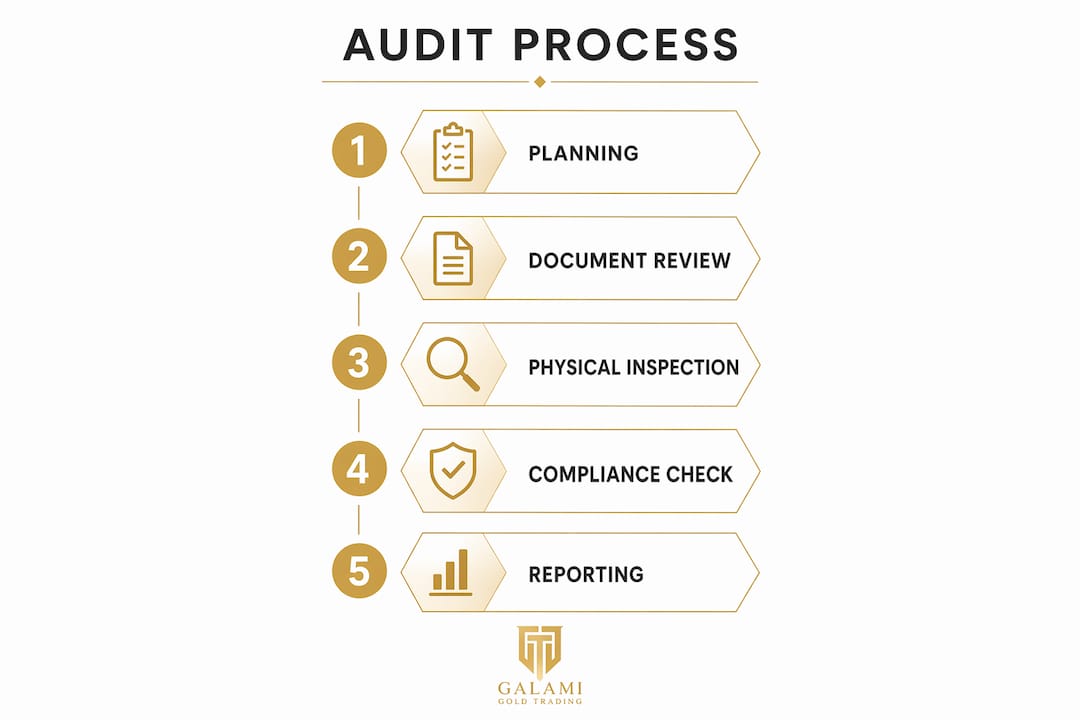
The audit begins before anyone enters a vault. Auditors review custodian inventory reports, bar lists, and prior audit records. Critically, random sampling upon arrival strengthens chain-of-custody proof. Pre-notifying a vault of exactly which bars will be inspected creates an opening for fraudulent staging. The Reserve Bank of Australia’s audit of its holdings at the Bank of England included a surprise sample of several bars selected only upon the auditor’s arrival on-site, precisely to close that gap.
Physical inspection and the 5-test authentication stack
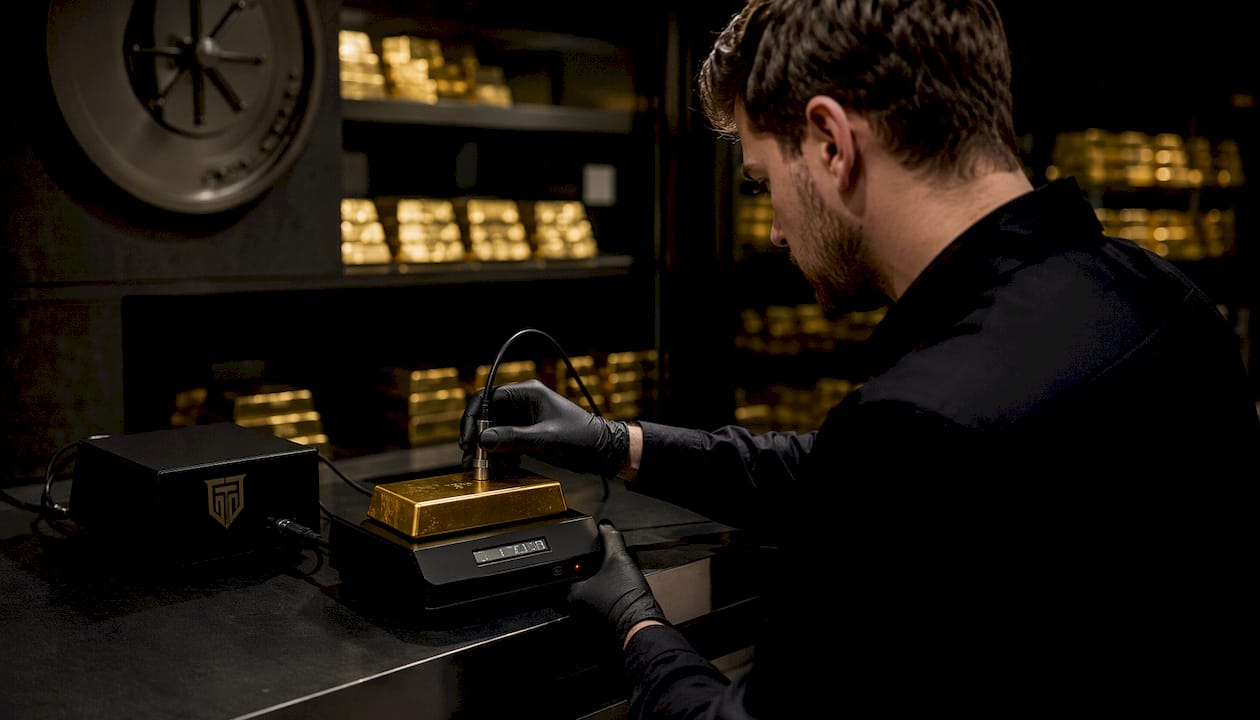
Visual checks alone miss sophisticated counterfeits, including gold-plated tungsten bars. A credible gold bar authentication protocol runs five tests on each sampled bar:
- XRF (X-ray fluorescence) for surface composition
- Ultrasound to detect internal voids or substituted cores
- Density testing confirming mass-to-volume ratios
- Sigma PMV electromagnetic screening for conductivity anomalies
- Caliper measurements verifying physical dimensions
The RBA’s audit applied ultrasound and weighing to a sample of its bars, confirming weights within the LBMA Good Delivery tolerance.
Compliance integration: AML and KYC
A comprehensive gold inventory audit integrates AML and KYC verification alongside physical inspection. Confirming a bar exists is not sufficient for US regulatory standards; the audit must also demonstrate that the gold’s provenance and ownership chain are clean. AML-related enforcement actions in precious metals increased notably in recent years, which reflects how seriously regulators are treating this layer of due diligence.
Access controls and dual control procedures
Dual control requiring two authorized personnel during any vault access is a non-negotiable procedural standard. Skipping it constitutes a compliance failure regardless of how clean the audit results appear. Galamigold’s operational standards reflect this principle: vault access protocols and segregation of duties are treated as audit prerequisites, not afterthoughts. For institutional clients evaluating gold trading standards, this procedural discipline is a direct signal of counterparty reliability.
Frequency recommendations
- Daily spot-checks for active vault operators
- Weekly cycle audits covering rotating bar subsets
- Quarterly full audits for institutional holdings and regulatory audit compliance
Galamigold operates with audited, transparent supply chains across established gold corridors. If you are deploying capital into physical gold, explore Galamigold’s trading program to see how verified custody and compliance standards are built into every position.

Key Takeaways
A physical gold audit combines hands-on bar verification, multi-method authentication testing, and AML/KYC compliance checks to confirm that gold holdings are real, accurate, and clean.
| Point | Details |
|---|---|
| Physical vs. financial audit | Physical audits verify the metal itself; financial auditors rely on inspection firm reports. |
| 5-test authentication stack | XRF, ultrasound, density, Sigma PMV, and calipers together catch counterfeits that visual checks miss. |
| Random sampling integrity | Surprise on-site sampling prevents fraudulent bar staging and strengthens chain-of-custody proof. |
| Dual control requirement | Two authorized personnel must be present for vault access; skipping this is a direct compliance violation. |
| AML/KYC integration | Compliance verification is a required audit component under US regulatory standards, not an optional add-on. |
Recommended
- Types of Physical Gold Products: 2026 Investor Guide
- What Is Bulk Gold Trading: Investor's 2026 Guide
- Step by Step Gold Transaction Process: 2026 Guide
- Advantages of Wholesale Gold Trading for Investors
Ready to invest in physical gold trade finance?
Both the Zambia–Dubai and Sierra Leone–Dubai programs are open to qualified investors. Minimum investments from $115,000 USD or €125,000 EUR.
Zambia–Dubai Program Sierra Leone–Dubai Program